
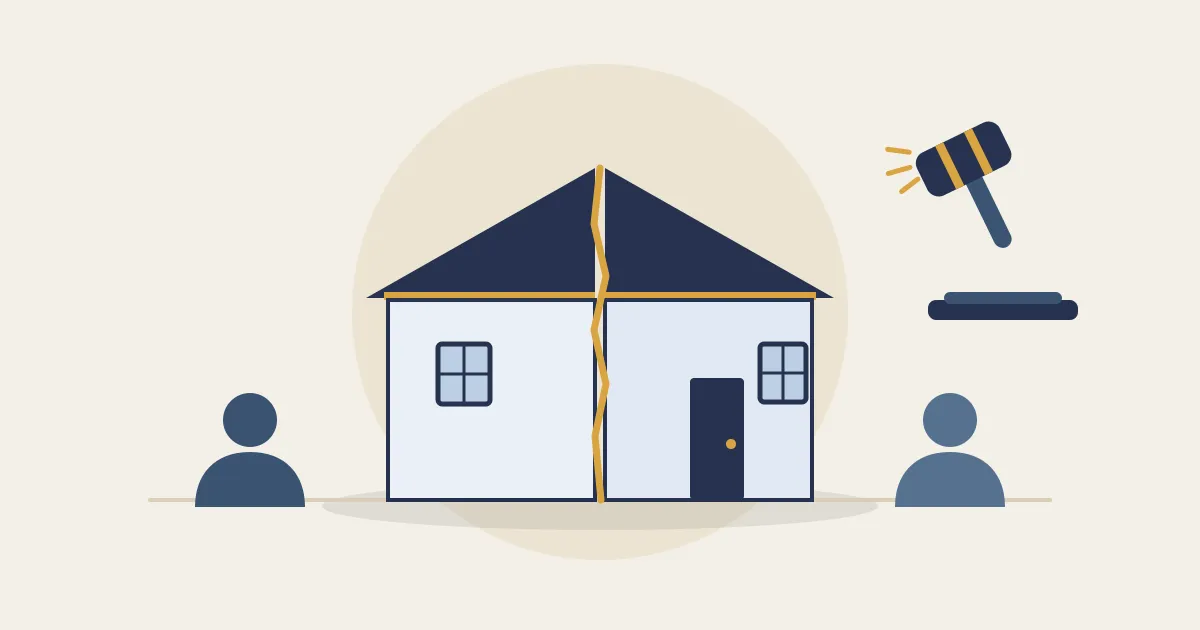
Partition Lawsuit: When California Co-Owners Cannot Agree on a Shared Home
A partition lawsuit is how one co-owner of a property can force its division or sale when the owners cannot agree. This article explains what a partition action is, why any co-owner can start one, and the three ways a California court can resolve it. It also covers a newer law that protects families with inherited property, why the risk often appears after an inheritance, and how clear estate planning helps a family avoid the whole problem. Every source linked at the end is a government page.
What a Partition Lawsuit Is
A partition lawsuit is a court action that divides or sells property owned by more than one person. It gives co-owners a way out when they cannot agree on what to do with real estate they hold together. California's partition law lives in the Code of Civil Procedure, in the sections that begin at 872.010. When a court grants a partition, it ends the shared ownership and splits the value among the owners by their shares.
Any Co-Owner Can Force It
The most surprising feature of partition is how easily one owner can start it. In California, a co-owner has an almost absolute right to partition, and they do not need the other owners' permission or any proof of wrongdoing. Owning a share and wanting out is enough. This right belongs to anyone who holds title with others, such as siblings who inherited a house, unmarried partners who bought together, or business partners who share an investment. One narrow exception applies: spouses dividing community property use family court instead of a partition action.
Three Ways a Court Can Partition Property
A California court can resolve a partition in one of three ways. The first is partition in kind, which physically divides the property into separate pieces, one for each owner. This works for open land but rarely fits a single house, which you cannot cut in half. The second is partition by sale, where the court orders the property sold and divides the money by ownership share. This is the common outcome for a home. The third is partition by appraisal, a buyout in which one owner pays the others the appraised value of their shares and keeps the property.
New Protections for Families: The Partition of Real Property Act
California added protections for co-owners through the Partition of Real Property Act, which applies to partition cases filed on or after January 1, 2023. Lawmakers wrote it largely to protect families who inherit property together. Under the Act, the court first orders an appraisal to set the property's fair market value. Owners who want to keep the property then get the first chance to buy out the owners who want to sell, at that appraised value. If no buyout happens and a sale is still needed, the law favors an open-market sale over a quick auction, because an open sale usually brings a higher price for everyone. These rules apply to property held as tenants in common when no written agreement already governs how the owners will divide it.
Why This Risk Appears After an Inheritance
Partition often surfaces when parents leave a home to several children at once. The children become co-owners, and they may want different things. One child may want to move into the home and keep its low property tax base under Proposition 19, while another wants to sell and take the cash. When they cannot agree, any one of them can file a partition lawsuit and force a sale. That sale can defeat the plan to keep the home and its tax benefit, and it can strain the family in the process.
How Good Estate Planning Avoids a Partition Lawsuit
A partition lawsuit is usually avoidable with planning done in advance. A parent can direct the home to the one child who will live in it, rather than leaving it to all the children as co-owners. A trust can set clear instructions and build in a buyout, so the child who keeps the home compensates the others without a court fight. Deciding these questions while the parent is alive prevents the disagreement that leads to partition, and it protects both the family relationships and any Proposition 19 tax benefit tied to the home. Because these arrangements are technical, families usually work with an estate planning attorney to get them right.
Further Reading From Government Sources
California Code of Civil Procedure section 872.210 sets out who may bring a partition action and the exclusion for spouses dividing community property.
California Code of Civil Procedure section 874.311 is the start of the Partition of Real Property Act and explains where the Act applies.
California Code of Civil Procedure section 874.316 requires the court to determine the property's fair market value, usually through an appraisal.
California Code of Civil Procedure section 874.317 gives co-owners the right to buy out those who want to sell.
This article is a plain-language guide, not legal advice. Partition and co-ownership disputes turn on the specific facts of your title and family, so confirm your situation with a qualified California attorney before you act.


Bart Hubbard / Real Estate Associate at HomeSmart ICARE Realty | DRE #01815497
1891 E Roseville Pkwy #180 • Roseville, CA 95661 • Phone: 916.993.8680
Copyright 2026
Nothing on this page is legal or tax advice. Procedures and dollar thresholds change, and every estate is different. Please confirm the specifics of your situation with a licensed California attorney.